Finding the correct paint code for your Mitsubishi is essential for accurate touch-ups, collision repairs, or custom modifications. Whether you drive a 2010 Lancer Evolution or a 2022 Outlander, knowing where to locate this crucial information can save you time and ensure perfect color matching.
Understanding Mitsubishi Paint Code Format
Mitsubishi uses a specific format for their paint codes, typically consisting of three characters that may include letters and numbers. Common examples include W37 (Cool Silver Metallic), P31 (Rally Red Metallic), or X42 (Labrador Black Pearl). These codes are universal across Mitsubishi's global lineup, making them reliable for ordering paint from any authorized dealer.
Primary Paint Code Locations
Driver Side Door Jamb
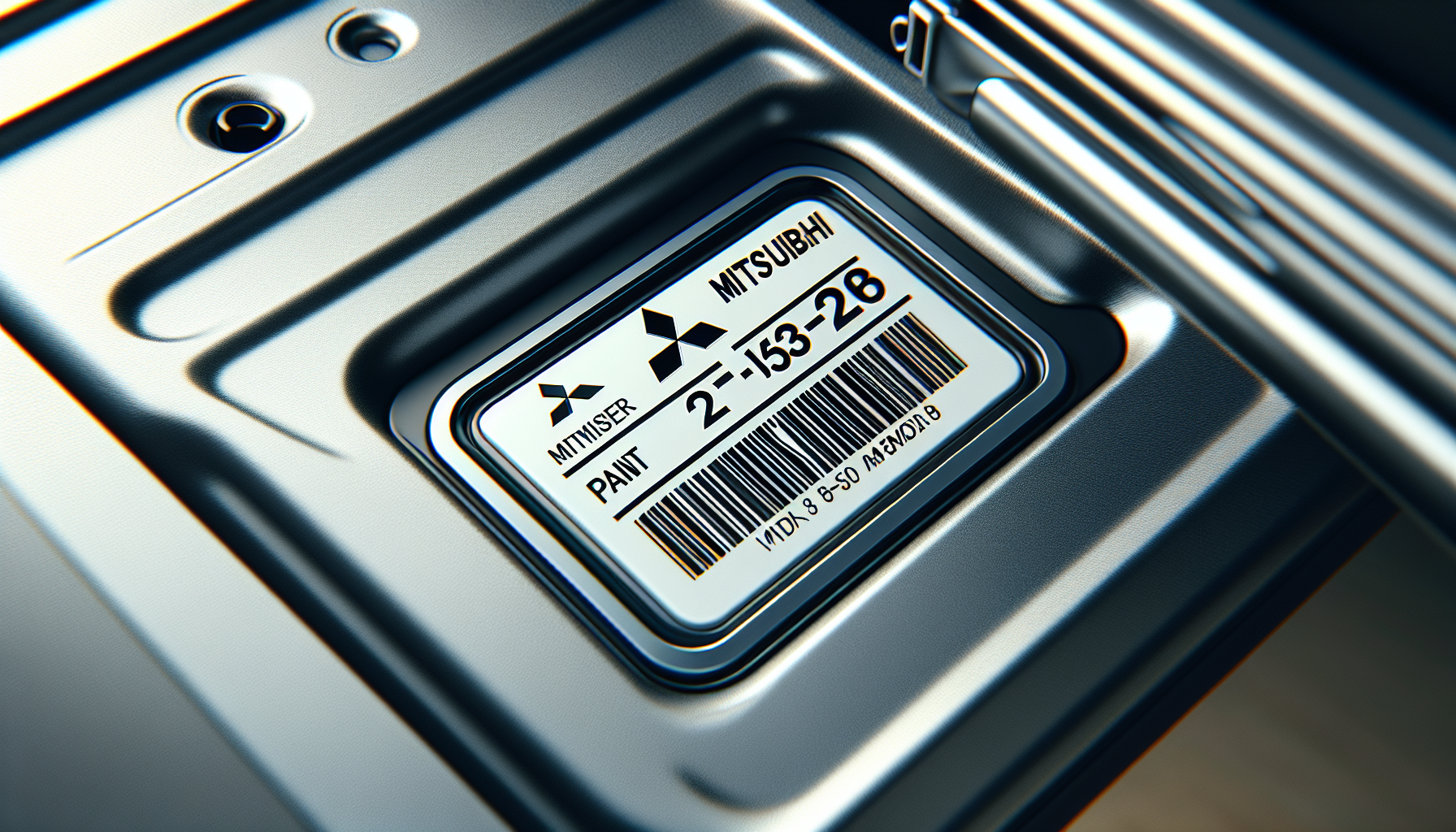
The most common location for Mitsubishi paint codes is on the driver's side door jamb. Open the driver's door and look for a white or silver sticker on the door frame where the door latches. This rectangular label contains multiple pieces of information, including the VIN, manufacturing date, and paint code. The paint code is usually labeled as "COLOR" or "PAINT" followed by the three-character code.
Engine Bay Locations
Many Mitsubishi models, particularly the Galant, Eclipse, and 3000GT, feature paint code stickers in the engine compartment. Check the following areas:
- On the radiator support bracket (front center of engine bay)
- Near the strut towers on either side
- On the firewall behind the engine
- Along the inner fender wells
For turbocharged models like the Lancer Evolution, the sticker is often positioned on the passenger side strut tower to avoid heat damage from the intercooler piping.
Model-Specific Paint Code Locations
Mitsubishi Outlander and ASX
For 2014 and newer Outlander models, the paint code sticker is typically located on the driver's side B-pillar, visible when the front door is open. The ASX follows a similar pattern, with the code positioned on the door jamb area just below the door latch mechanism.
Mitsubishi Lancer and Evolution
Lancer models from 2008-2017, including the high-performance Evolution variants, commonly have their paint codes on the radiator support in the engine bay. Look for a white sticker with black text positioned near the center of the radiator support bracket.
Mitsubishi Eclipse and Eclipse Cross
The original Eclipse (1990-2012) typically features the paint code on the driver's side door jamb, while the newer Eclipse Cross places it on the driver's side B-pillar. Some Eclipse models may have an additional sticker in the trunk area near the spare tire.
Mitsubishi Mirage
Due to its compact size, the Mirage usually has the paint code sticker located exclusively on the driver's side door jamb. The sticker is smaller than those found on larger vehicles but contains the same essential information.
Alternative Methods for Finding Paint Codes
Trunk Area Inspection
Some Mitsubishi models, particularly sedans like the Galant and older Diamante, may have backup paint code stickers in the trunk. Check the trunk lid, spare tire well, and along the rear quarter panel areas inside the trunk space.
Using Your VIN Number
If the physical sticker is missing or illegible, your vehicle's VIN number can help identify the paint code. Contact a Mitsubishi dealership with your VIN, and they can access the factory build sheet to determine the original paint color. This method is particularly useful for older vehicles where stickers may have deteriorated.
Paint Code Database Resources
Online paint code databases can cross-reference your Mitsubishi's year, model, and known color options to help narrow down potential codes. These resources are especially helpful when combined with visual color matching.
Tips for Successful Paint Code Location
When searching for your paint code, bring a flashlight or use your smartphone's flashlight feature, as door jambs and engine compartments can be poorly lit. Clean the area around suspected sticker locations, as dirt and grime can obscure important information. Take a photo of the sticker once found, as this creates a permanent record for future reference.
If you discover multiple stickers in different locations, verify that the paint codes match, as some vehicles may have had bodywork or repainting that could result in inconsistent information.