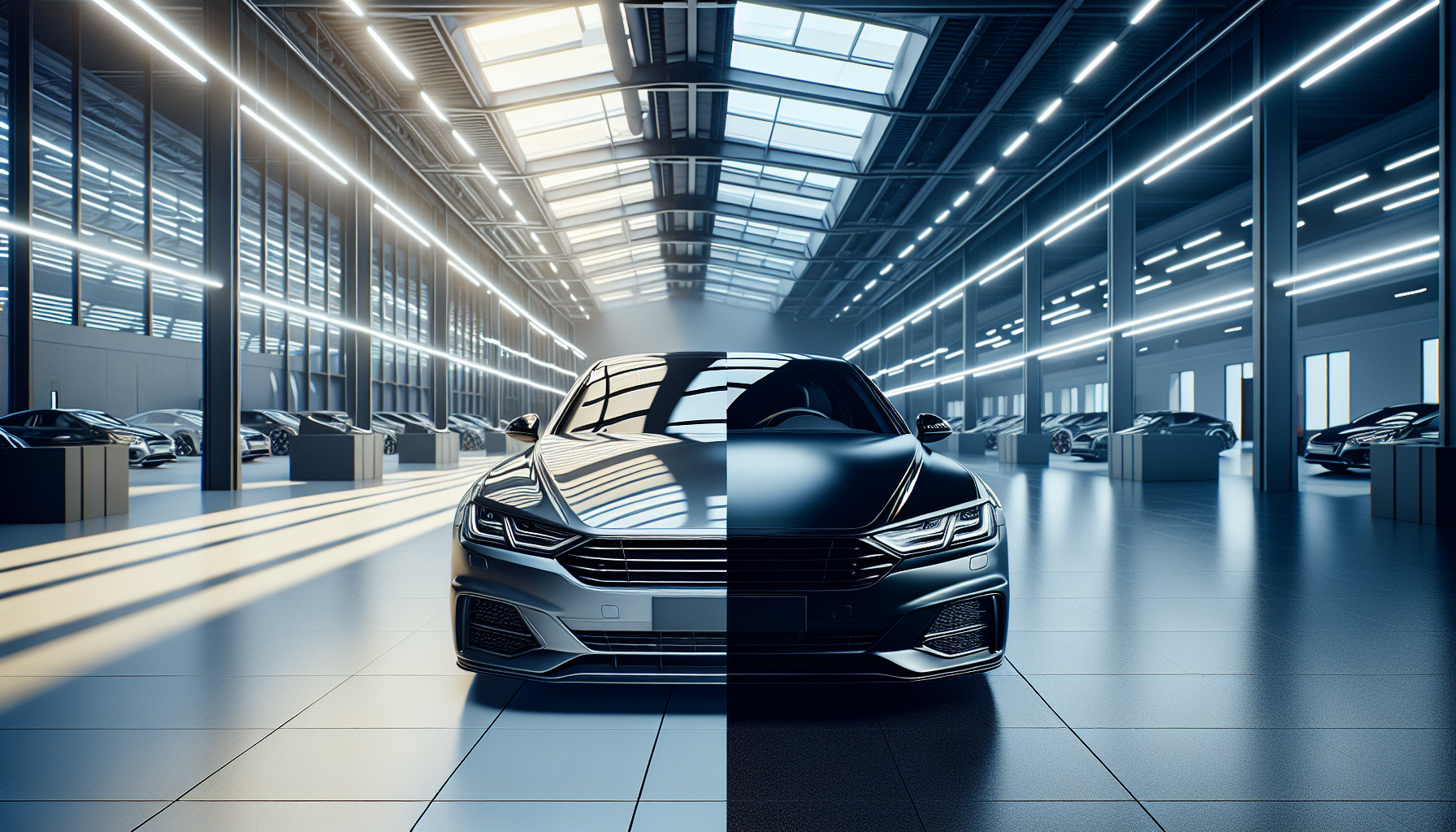
Understanding Car Paint Types: Metallic vs Solid
When choosing a car paint finish, understanding the fundamental differences between metallic and solid paint can save you money and ensure you get the look you want. These two paint types offer distinct advantages and drawbacks that affect everything from appearance to maintenance costs.
Solid paint, also called single-stage paint, consists of a base color without any metallic particles or special effects. Popular solid colors include Toyota's Super White, BMW's Alpine White, and Honda's Championship White. Metallic paint incorporates tiny aluminum flakes that create depth and sparkle under light.
Visual Appearance and Finish Quality
How Solid Paint Looks
Solid paint delivers a clean, uniform appearance with consistent color saturation. Classic examples include Ferrari's Rosso Corsa red, Mercedes-Benz's Obsidian Black, and Subaru's Pure Red. The finish appears flat under direct sunlight but maintains excellent color consistency across all panels.
Solid colors work exceptionally well for professional vehicles, luxury cars emphasizing elegance, and classic car restorations where authenticity matters.
Metallic Paint Characteristics
Metallic paint creates a dynamic appearance that changes with lighting conditions and viewing angles. Popular metallic options include Ford's Magnetic Gray, Audi's Nardo Gray, and BMW's Space Gray. The aluminum particles reflect light differently, creating depth and visual interest that solid colors cannot match.
Under direct sunlight, metallic paint shows subtle sparkle effects, while in shade, it appears deeper and richer than solid alternatives.
Durability and Protection Differences
Weather Resistance
Solid paint typically offers better UV resistance because it lacks metallic particles that can oxidize over time. However, darker solid colors like black and navy blue show scratches and swirl marks more easily than metallic alternatives.
Metallic paint provides superior scratch resistance due to its multi-layer construction and the way light reflects off the aluminum flakes, helping disguise minor imperfections.
Maintenance Requirements
Both paint types require regular washing and waxing, but metallic finishes are generally more forgiving of maintenance mistakes. The reflective particles help mask water spots and light scratches that would be obvious on solid paint.
When touching up chips or scratches, solid colors are significantly easier to match. You can often find exact color matches in your vehicle's paint code database without professional color matching. Metallic touch-ups require precise application techniques to blend the metallic particles properly.
Cost Considerations
Initial Purchase Price
Most manufacturers charge $300-800 more for metallic paint options. For example, BMW charges approximately $550 for metallic paint across most models, while Mercedes-Benz typically adds $720 for metallic finishes.
Some premium metallics like Audi's Daytona Gray or Porsche's Chalk command even higher premiums, sometimes exceeding $1,200.
Long-term Value Impact
Metallic paint generally maintains better resale value, especially in luxury segments. Popular metallic colors like silver, gray, and white typically retain value better than bold solid colors.
However, repair costs favor solid paint. Professional metallic paint repair requires specialized equipment and expertise, making accident repairs 20-30% more expensive than solid color repairs.
Which Paint Type Should You Choose?
Choose Solid Paint If:
- You prioritize easy maintenance and DIY touch-ups
- Budget constraints make the metallic upcharge impractical
- You prefer classic, timeless aesthetics
- Your vehicle will be used primarily for business purposes
Choose Metallic Paint If:
- Resale value is a primary concern
- You want a more premium appearance
- Minor scratches and imperfections worry you
- You enjoy the dynamic visual effects of metallic finishes
Special Considerations
If you're restoring a classic car, research the original paint specifications in manufacturer paint code databases to maintain authenticity. Many collectors prefer period-correct solid colors for vintage vehicles.
For daily drivers in harsh climates, metallic paint's superior scratch resistance often outweighs the higher initial cost. However, if you plan extensive modification work requiring frequent repainting, solid colors offer significant cost savings.
Consider your local climate when deciding. In areas with intense UV exposure, high-quality solid paints with ceramic coatings can provide excellent protection while maintaining the cost advantages of non-metallic finishes.