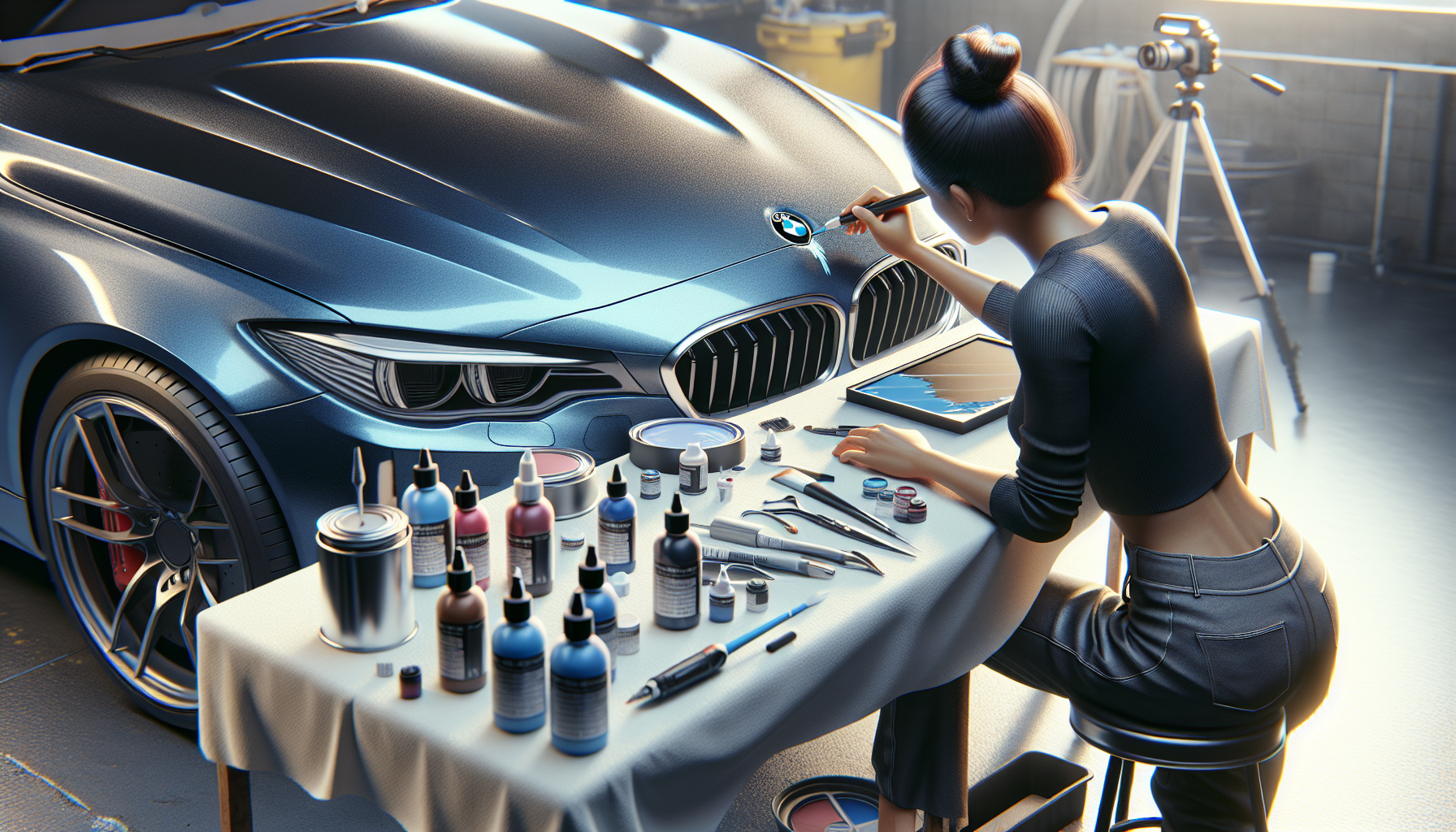
Understanding Your Car's Paint Code
Finding the perfect color match touch up paint starts with locating your vehicle's paint code. This alphanumeric code is your key to achieving a seamless repair that blends invisibly with your car's original finish.
Most manufacturers place paint codes in easily accessible locations. For Honda vehicles, check the driver's side door jamb for a white sticker containing the paint code after "C:" or "Color:". Toyota owners should look for a metal plate in the same location, while Ford places their codes on the driver's side door jamb or glove compartment. BMW typically positions paint codes under the hood near the strut towers.
Common paint codes include Honda's "NH731P" for Crystal Black Pearl, Toyota's "040" for Super White, and Ford's "UH" for Agate Black Metallic. A comprehensive paint code database can help you decode these numbers and letters to find the exact color name and mixing formula.
Types of Touch Up Paint Products
Touch up paint comes in several forms, each suited for different repair needs and skill levels.
Paint Pens
Paint pens offer the most convenient application method for minor scratches and chips. The built-in brush tip allows for precise application, making them ideal for small imperfections. However, they provide limited coverage and may not blend perfectly on larger areas.
Brush-In Bottles
Small bottles with attached brushes work well for slightly larger chips and scratches. They contain more paint than pens and allow for better color layering. The brush size makes them suitable for repairs up to about a quarter-inch in diameter.
Aerosol Spray Cans
Spray cans deliver the most professional-looking results for larger areas but require more preparation and technique. They're perfect for panel sections, door edges, or multiple scratches in the same area. Proper masking and multiple light coats are essential for success.
Preparing Your Vehicle for Touch Up
Proper preparation determines whether your touch up job looks professional or amateur. Start by washing the affected area thoroughly with automotive soap and water. Remove any wax or polish using a degreasing agent or rubbing alcohol.
For deeper scratches, you'll need to sand the area lightly with 2000-grit sandpaper, working in circular motions until the scratch edges are smooth. Clean the area again with a tack cloth to remove all dust particles.
Temperature and humidity matter significantly. Work in shade when temperatures are between 65-75°F with low humidity. Direct sunlight or extreme temperatures can cause the paint to dry too quickly, creating texture issues or poor adhesion.
Application Techniques for Professional Results
The key to invisible touch ups lies in applying thin, multiple coats rather than trying to fill the damage in one application.
For Small Chips
Use a toothpick to apply paint in thin layers, allowing each coat to dry for 10-15 minutes before adding the next. Build up the paint level gradually until it's slightly above the surrounding surface. After 24 hours, wet sand with 2000-grit paper to level the repair.
For Scratches
Apply paint along the scratch direction using light, overlapping strokes. Avoid overloading the brush or pen. Multiple thin coats always produce better results than one thick application that can run or sag.
For Larger Areas
When using spray paint, maintain a consistent 6-8 inch distance from the surface. Apply in light, overlapping passes, moving the can continuously to avoid buildup. Start each pass off the panel and sweep across the repair area.
Color Matching Challenges and Solutions
Even with the correct paint code, perfect color matching can be challenging due to paint aging and environmental factors.
Metallic and pearl paints require special attention to spray technique and lighting conditions. The metal flakes must be oriented properly to match the surrounding finish's sparkle pattern. This often requires wet sanding between coats and careful polishing.
For older vehicles, paint fading may make new touch up paint appear darker or more vibrant than the surrounding area. In these cases, consider having the touch up paint custom-mixed at an automotive paint shop where they can adjust the formula to match your car's current color.
If your initial touch up doesn't match perfectly, don't panic. Many professional painters wet sand the repair area and apply a blending clear coat over a larger area to help the repair disappear into the surrounding paint.
With patience and the right technique, even novice car owners can achieve professional-looking touch up repairs that protect their vehicle's value and appearance.