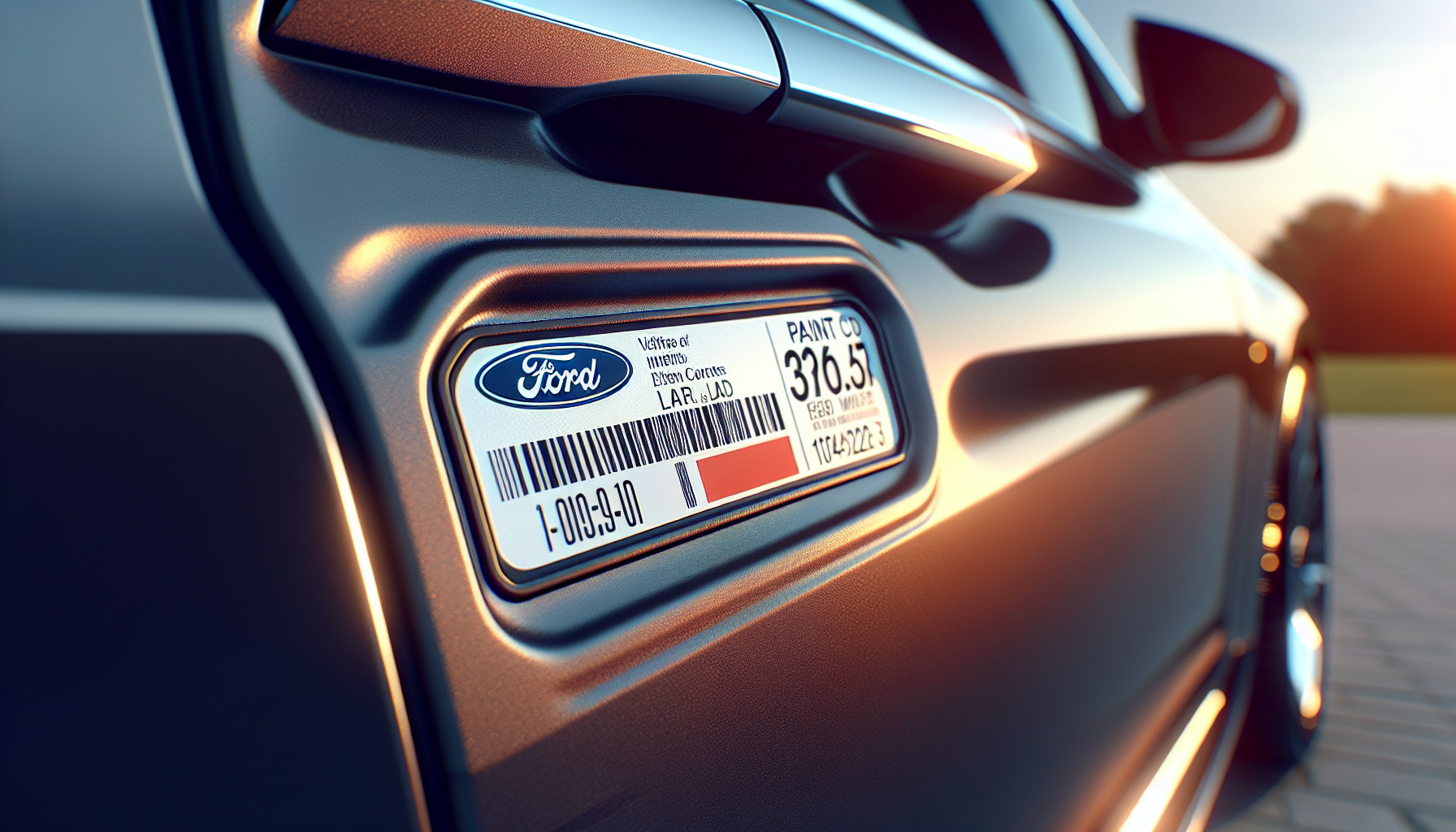
Understanding Your Vehicle's Paint Code
Your car's paint code is a crucial piece of information that identifies the exact color and finish of your vehicle's original paint. Whether you're dealing with touch-ups, repairs, or a complete repaint, finding this alphanumeric code can save you time and ensure a perfect color match.
Paint codes typically consist of 2-8 characters that may include letters, numbers, or both. For example, Honda uses codes like "NH731P" for Crystal Black Pearl, while Ford might use "UH" for Agate Black Metallic.
Common Paint Code Locations by Vehicle Type
Door Frame and Door Jamb Areas
The most common location for paint codes is within the driver's side door frame. Open your driver's door and look for a white or silver sticker on the door jamb, door frame, or the edge of the door itself. This area typically contains multiple vehicle information labels.
For vehicles like the Toyota Camry, you'll find the paint code on a sticker located on the driver's side door jamb, clearly marked as "C/TR" followed by the code. BMW vehicles often display the paint code on a label inside the driver's door frame, listed as "Lackcode" or simply "Paint."
Under the Hood Locations
Many manufacturers place paint code labels under the hood, typically on the radiator support, strut towers, or firewall. Ford vehicles commonly have the paint code on a sticker attached to the radiator support, while Chevrolet often places it on the driver's side strut tower.
For Honda Accord models, check the engine compartment for a white sticker on the driver's side shock tower. The paint code appears after "NH," "R," or "B" depending on the color family.
Brand-Specific Paint Code Locations
German Manufacturers
Mercedes-Benz: Look for the paint code on a sticker in the engine bay, typically on the radiator support or passenger side shock tower. The code follows "DB" or "040" on the label.
Audi: Paint codes are usually found on a sticker in the spare tire well or on the driver's side door jamb. Look for "LY" followed by alphanumeric characters.
Volkswagen: Check the spare tire compartment or the driver's side door jamb for a sticker containing "LY" followed by the paint code.
Japanese Manufacturers
Nissan: The paint code sticker is typically located on the driver's side door jamb or in the engine bay on the radiator support. Look for a three-character code like "KH3" for Super Black.
Mazda: Paint codes are usually found on the driver's side door jamb or in the engine compartment. The code appears after "PAINT" on the vehicle information label.
American Manufacturers
General Motors (Chevrolet, GMC, Cadillac): Check the glove compartment for a service parts identification sticker, or look in the trunk area. The paint code is typically listed as "BC/CC" followed by a letter-number combination.
Chrysler (Dodge, Jeep, Ram): Paint codes are commonly found on the driver's side door jamb or in the engine bay. Look for "PNT" followed by the code on the vehicle certification label.
Alternative Methods for Finding Paint Codes
Vehicle Identification Number (VIN) Decoding
If you cannot locate the physical paint code label, your VIN can help identify the original paint color. Contact your dealer's parts department with your VIN, and they can look up the original paint specification using their paint code database.
Online Paint Code Databases
Several online resources maintain comprehensive paint code databases where you can search by year, make, model, and color name to find the corresponding code. These databases are particularly helpful when physical labels have been damaged or removed.
Tips for Successful Paint Code Location
Use a flashlight when searching in dimly lit areas like door jambs or under the hood. Paint code labels can fade over time, so look carefully for faint text or numbers. Take a photo of any labels you find, as this creates a permanent record for future reference.
If your vehicle has been repainted, the original paint code may not match the current color. In such cases, professional color matching at an automotive paint shop may be necessary to achieve the best results for touch-ups or repairs.