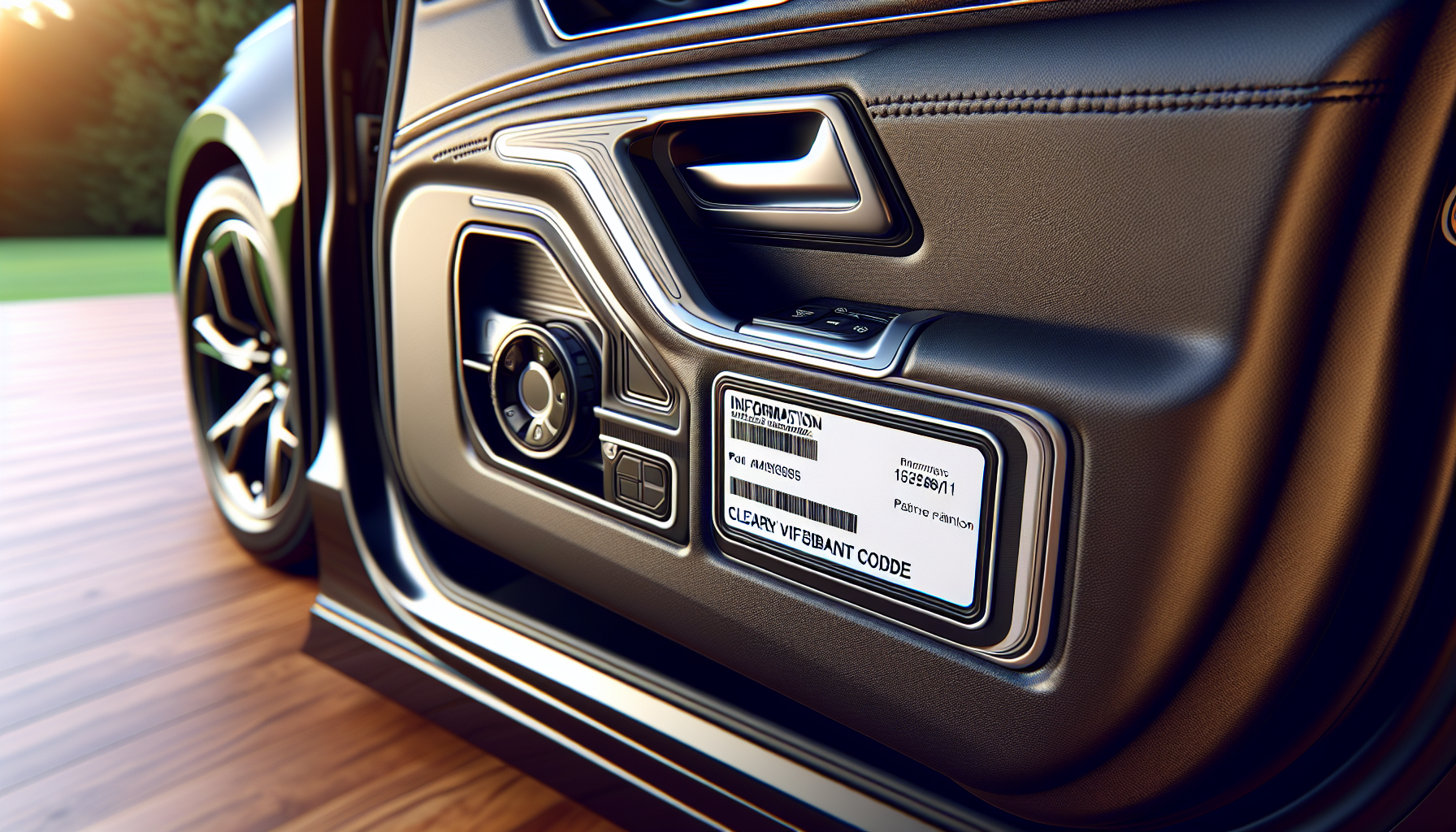
Finding the correct paint code for your Toyota is essential when touching up scratches, repairing damage, or ordering OEM paint. Toyota places these codes in specific locations on their vehicles, and knowing where to look can save you time and ensure you get the exact color match for your car.
Primary Paint Code Locations on Toyota Vehicles
Toyota typically places paint code information on a sticker or metal plate in one of several standard locations. The most common spot is on the driver's side door jamb, but the exact placement can vary depending on your vehicle's model year and type.
Driver's Side Door Jamb
Open the driver's side door and look at the door frame where the door latches. You'll find a white or silver sticker containing various vehicle information, including the paint code. On most Toyota models from 2000 onwards, this sticker is located on the door pillar (B-pillar) rather than on the door itself.
The paint code appears as a three-character combination of letters and numbers. Common Toyota paint codes include 1G3 (Magnetic Gray Metallic), 040 (Super White), and 218 (Attitude Black Metallic). Look for labels like "C/TR" or "COLOR" followed by the code.
Engine Bay Locations
Some Toyota models, particularly trucks and SUVs like the Tacoma, 4Runner, and Tundra, may have the paint code sticker located in the engine compartment. Check the firewall area, radiator support, or the driver's side strut tower. The sticker is usually white with black text and contains the same vehicle identification information found on door jamb stickers.
Model-Specific Paint Code Locations
Toyota Camry and Corolla
For the popular Camry and Corolla models, the paint code is almost always located on the driver's side door jamb. Models from 2012 to 2023 consistently place this information on a rectangular white sticker on the B-pillar. Older models from the early 2000s might have the code on the actual door frame.
Toyota RAV4 and Highlander
SUV models like the RAV4 and Highlander typically follow the same door jamb placement as sedans. However, some model years between 2006 and 2014 also include a duplicate sticker in the engine bay near the passenger side strut tower, making it easier to access if the door jamb sticker is damaged or missing.
Toyota Prius
Prius models from 2004 to present maintain the standard door jamb location for paint codes. The hybrid's unique body construction doesn't affect the placement of this important identification sticker.
Understanding Toyota Paint Code Formats
Toyota uses several different formats for their paint codes, which can sometimes cause confusion. The most common format is a three-character alphanumeric code, but you might also see longer codes or additional letters indicating special finishes.
Standard codes like 089 (Indigo Ink Pearl) or 6T7 (Cavalry Blue) are straightforward. Pearl and metallic finishes sometimes include additional characters or are listed alongside a clearcoat code. If you're having trouble identifying your specific code, consulting a paint code database can help verify you have the correct information.
Tips for Locating Hard-to-Find Paint Codes
Sometimes paint code stickers can be damaged, faded, or placed in unusual locations. Here are some strategies to help locate your Toyota's paint code:
- Clean the area thoroughly - Dirt and grime can obscure stickers, especially in door jambs
- Use a flashlight - Stickers are often in shadowed areas that are difficult to see
- Check multiple locations - Some vehicles have duplicate stickers in different spots
- Look for partial codes - Even damaged stickers might have readable portions
What to Do If You Can't Find the Paint Code
If your paint code sticker is missing or completely illegible, you have several options. Your local Toyota dealership can look up the original paint code using your Vehicle Identification Number (VIN). They have access to build records that specify the factory paint color for your specific vehicle.
Alternatively, automotive paint suppliers often maintain extensive paint code databases and can help identify your color through visual matching or by cross-referencing your VIN with manufacturer specifications.
Professional body shops also have color-matching technology that can analyze your paint and create a custom formula, though this option is typically more expensive than using the original paint code for an exact OEM match.