Understanding Ford Paint Codes
Finding your Ford's paint code is essential for matching touch-up paint, ordering body parts, or handling insurance claims. Ford uses a standardized system where the paint code appears as a two-character combination, such as 'UH' for Ebony Black or 'PQ' for Ingot Silver. These codes ensure you get the exact factory color match for your specific vehicle.
Primary Paint Code Locations on Ford Vehicles
Driver's Side Door Jamb
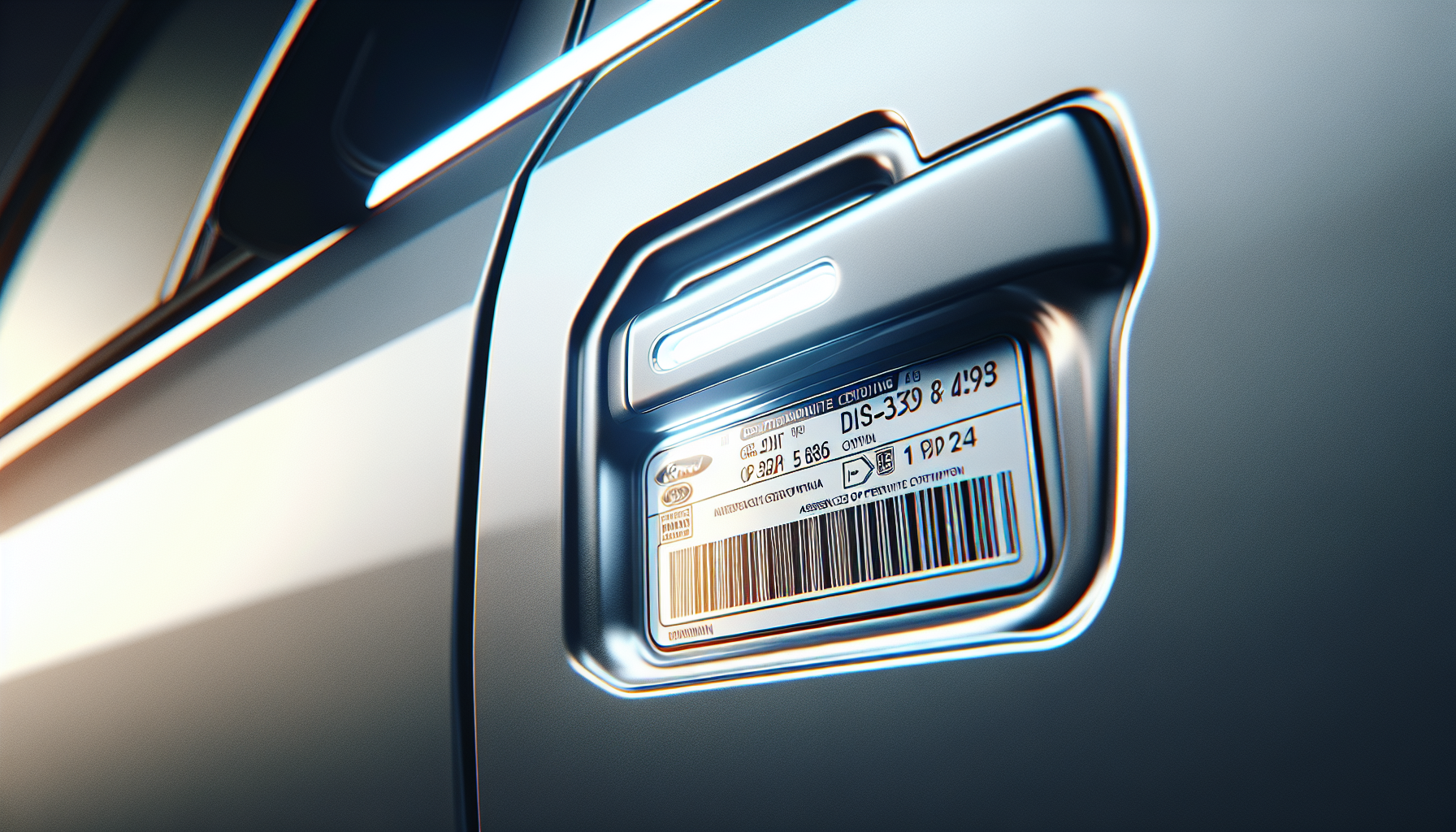
The most common location for Ford paint codes is on the driver's side door jamb. Open the driver's door and look for a white or silver sticker on the door frame where the door latches. This Federal Safety Certification Label contains multiple pieces of information, including your paint code listed as 'EXT PNT' or 'PAINT' followed by two characters.
On newer Ford models from 2010 onwards, including the F-150, Escape, and Focus, this label is typically positioned about halfway up the door jamb. The paint code appears in a dedicated section, making it relatively easy to identify among other vehicle information.
Passenger Side Door Jamb
Some Ford models, particularly trucks like the F-250 and F-350 Super Duty series, may have the paint code sticker located on the passenger side door jamb instead. Check the same area where you would look on the driver's side – the door frame where the door closes.
Alternative Paint Code Locations
Engine Compartment
If you cannot locate the paint code on the door jambs, check under the hood. Many Ford vehicles have a duplicate label or separate paint code sticker attached to the radiator support, strut tower, or firewall. This location is particularly common on older Ford models from the 1990s and early 2000s.
For Ford Mustangs manufactured between 2005 and 2014, the paint code sticker is often found on the passenger side strut tower, near the brake fluid reservoir.
Glove Box and Interior Locations
Some Ford vehicles have paint code information inside the glove box or on the driver's side door panel. Check for any stickers or labels that might contain the two-character paint code. This backup location helps when exterior labels become damaged or illegible due to weather exposure.
Model-Specific Paint Code Locations
Ford F-150 and Pickup Trucks
For Ford F-150 trucks from 2015 to present, the paint code sticker is consistently located on the driver's side door jamb. However, earlier F-150 models from 2004 to 2014 may have the code on either the driver's or passenger side door jamb, so check both locations if necessary.
Ford Escape and SUVs
Ford Escape models typically have the paint code on the driver's side door jamb. For the Ford Explorer, check the same location, though some model years between 2011 and 2019 may have an additional reference sticker under the hood.
Ford Focus and Compact Cars
The Ford Focus consistently places paint codes on the driver's side door jamb across all generations. The Ford Fiesta follows the same pattern, with the certification label clearly visible when opening the driver's door.
Tips for Reading Ford Paint Codes
When you locate the sticker, look for abbreviations like 'EXT PNT,' 'PAINT,' or 'CLR' followed by the two-character code. Some labels may also include the paint name, such as 'Oxford White' with code 'Z1,' which helps confirm you've found the correct information.
If the sticker is faded or damaged, try taking a photo with your phone's flashlight to enhance visibility. Sometimes different lighting angles can reveal information that appears illegible at first glance.
For verification, you can cross-reference your found code with a comprehensive paint code database to ensure the color description matches your vehicle's actual appearance.
What to Do If You Cannot Find the Paint Code
If the paint code sticker is missing or completely illegible, contact your local Ford dealership with your Vehicle Identification Number (VIN). The service department can look up your original paint code using Ford's internal database system.
Alternatively, an automotive paint specialist can sometimes match your paint color using spectrophotometer technology, though this method works best with original, unfaded paint areas.